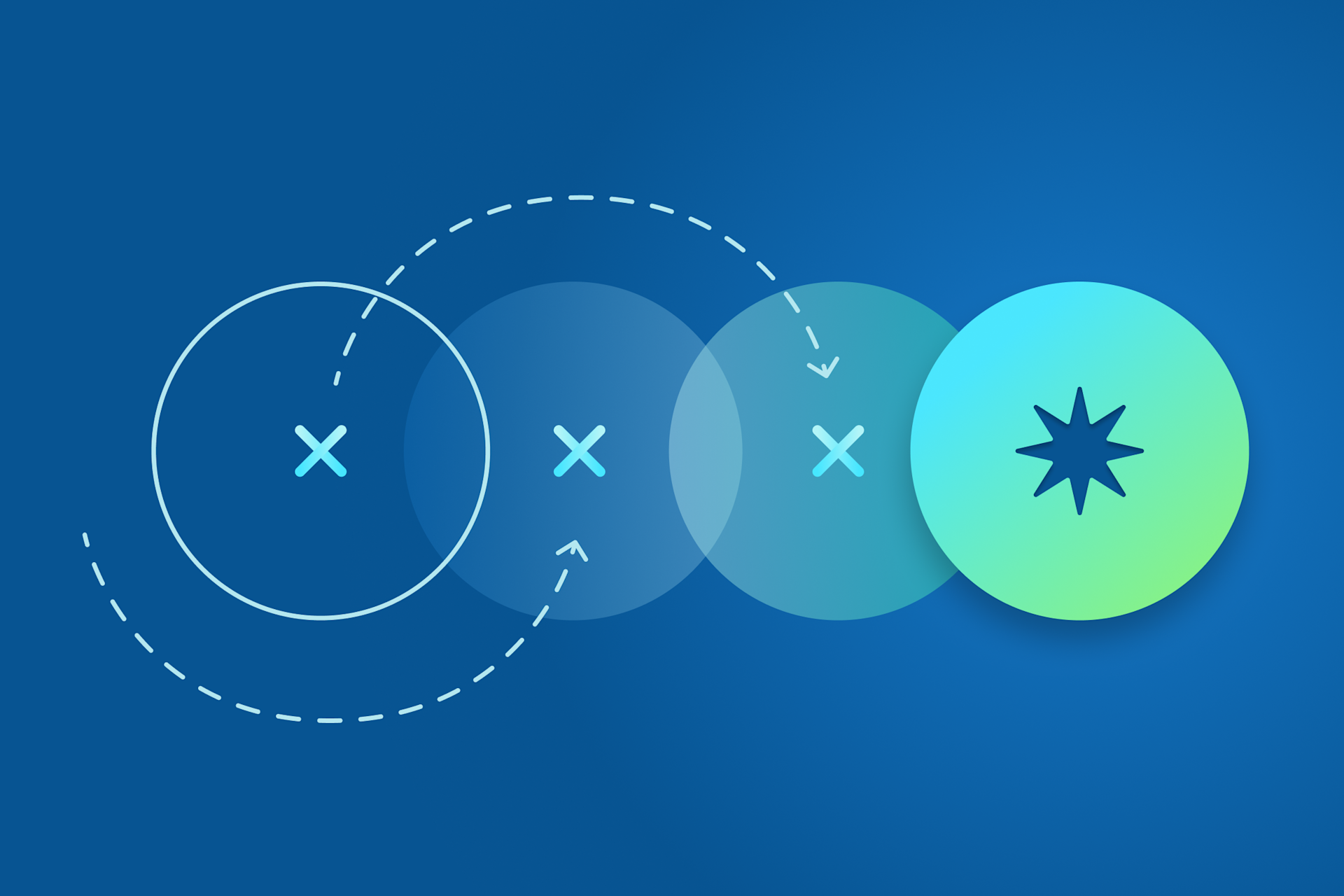
Stepping into a brand-new project is a recurring challenge for any generalist, and the speed at which you bridge the gap between confusion and contribution is what ultimately defines your impact.
It often begins when you step into a brand-new project or an unfamiliar client industry. There’s a familiar sense of disorientation. The language is unfamiliar, full of acronyms you don’t recognize. The system doesn’t make sense yet, and the workflows aren’t obvious.
And it’s never just one kind of problem. One project, you’re designing for a completely different set of users, maybe healthcare providers instead of retail customers. Next, you’re trying to understand how something gets priced or estimated in a space you’ve never touched before. Sometimes the project itself is messy, layers of systems and edge cases you have to untangle just to find a starting point.
The specific problems change, but the learning journey remains the same.
Defining Expertise Velocity
Initially, you’re lost. Then, suddenly, it clicks. The moment it does, you begin to contribute.
The real shift isn’t just that you can learn a new space, it’s that you’re becoming faster at it. The gap between confusion and clarity keeps shrinking. You learn to ask better questions earlier and spot familiar patterns sooner.
There is a definitive pattern here. It is a skill.
I call it Expertise Velocity: the speed at which you become truly valuable in an unfamiliar space.
It rarely looks like expertise at first.
This isn’t the same as strategic planning or defining the work itself. Strategy shapes what to do and why. Expertise Velocity is about how quickly you understand a new domain well enough to contribute meaningfully to that work. It’s the difference between knowing how to frame the right direction and being able to get there faster, even when the space is unfamiliar.
It may look like ignorance, asking “basic” questions and trying to make sense of things that feel obvious to the deeply rooted team. Think of that moment in a meeting when you preface a question with, “This might be a dumb question…” and it turns out to be the exact thing the team needed to pause and reconsider. Those are often the questions that surface assumptions the team hasn’t thought about in years.
Why the Industry Gets It Wrong
The professional world doesn’t often recognize or reward this. We tend to define design expertise by tenure within a specific domain or industry.
Job descriptions, client requests, and RFPs ask for years of experience in one space. Portfolios are organized by the types of work you’ve done. The expectation is that you build depth by staying in the same place long enough.
But familiarity is not the same as skill.
Knowing how a system operates is different from knowing how to challenge it. In fact, the longer you remain in one environment, the easier it is to stop seeing its flaws. The underlying assumptions become invisible, and established workflows begin to feel like “the only way.”
What’s often overlooked is what gets built when you don’t stay in one place. Repeatedly stepping into unfamiliar domains strengthens a different set of muscles: how to navigate ambiguity, how to ask better questions, how to recognize patterns across entirely different systems.
Over time, you don’t just get better at learning, you get faster at identifying what matters.
The Power of “New Eyes”
This is why Expertise Velocity is so valuable. When you are new to a space, you bring a fresh set of eyes. You are closer to the experience of a first-time user. The friction is immediate, and the gaps are easier to spot.
Because you have encountered these structural and behavioral patterns before, you don’t start from scratch. You recognize them sooner. You frame better questions. You cut through the noise and move faster towards the core problem.
The advantage isn’t that you know more facts. It’s that you understand what truly matters more quickly.
Where Depth Still Matters
In some spaces, this isn’t enough on its own. Some work still takes time. You can’t rush your way through things with a lot of rules or complex, older systems.
Expertise Velocity doesn’t replace this deep knowledge. It simply radically shortens the path and time required to achieve it.
Specializing Faster
If you have navigated many different industries or types of design projects, you might feel that your experience is fragmented or that you haven’t specialized deeply enough.
This is a misinterpretation.
What you have been doing is honing a critical and impactful skill. This skill is forged in environments that demand adaptability, especially on small, agile teams like ours at Sparkbox, where you are routinely challenged to step into unfamiliar spaces and make an immediate impact.
You remain a generalist, yes. But you have mastered the art of specializing faster.